.svg)

You have a concept in mind for your exhibition presence. You are working with excellent designers, and after a lot of brainstorming and iterations, you have an exhibition booth design in hand. The design incorporates your brand colors, products are arranged to display, and the layout has interactive visitor zones. The design essentially distills your brand’s core identity without skimping on the messaging.
Now what?
An exhibition booth is the first tangible interaction any potential customer has with your brand. It's more than a booth - it's an interactive space where credibility, innovation, and brand values are conveyed within seconds.
Which means that while design is an important aspect of realising your brand on the show floor, if the concept is not executed properly, even the most ambitious projects tend to lose impact.
Research from the Center for Exhibition Industry Research indicates that 81% of trade show attendees have buying authority, underscoring the critical role of a brand-consistent booth experience in engagement and lead generation.
This is why it's important to have an execution plan in place that makes sure that every single line and structure in your final design is translated on the show floor with a good finish.
Understanding Exhibition Booth Execution
Execution of an exhibition booth design entails an end-to-end process of turning a booth from a 3D conceptual design into a physical space, spanning logistics, fabrication, and on-site installation and dismantling.
It includes carpentry, electrical work, lighting, and graphic installation, ensuring the booth is safe, functional, and brand-aligned.
In practice, the following is the life cycle of a booth’s journey:
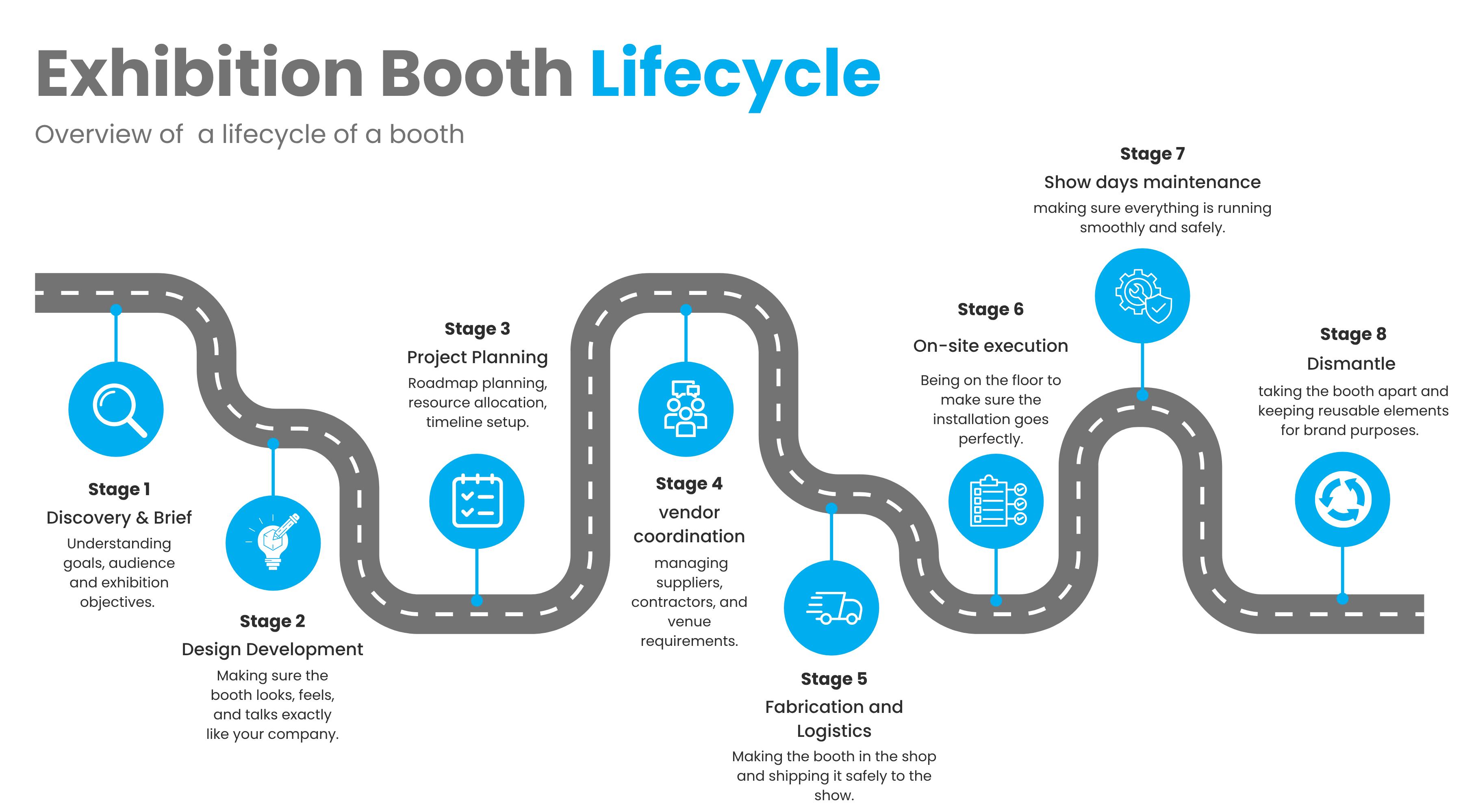
It's safe to say that booth execution is a complex multi-disciplinary process that requires meticulous planning, precision, coordination and execution. A successful booth execution involves a systematic approach to aligning various stakeholders and delivering a functional and visually cohesive space that fullfills the brand’s marketing objective.
Bridging the Gap Between Strategic Design and Strategic Execution
Bridging the gap between strategic design and execution requires aligning creative intent with practical realities from the very beginning of the project.
“Designs are created in isolation, without fully accounting for build feasibility, timelines, or on-ground constraints. I make sure that the execution team and design team are in on the mix from the start so that we design something that can actually shape up on the D-Day.” says Viral Momaya, Senior Project Manager.
This includes validating materials, refining layouts based on venue conditions, and anticipating logistical challenges before they arise.
This alignment ensures that strategy flows seamlessly into execution, reducing rework, delays, and compromises. When design decisions are made with execution in mind, the result is a smoother process, stronger outcomes, and a booth that truly delivers on its original vision.
Production: Laying the Groundwork for Seamless Execution
Production is a critical phase where the foundation for seamless execution truly begins to take shape. Once the 3D design is approved, the focus shifts to detailed planning. This includes creating precise 2D technical drawings that define the booth’s structure, dimensions, and build requirements. At the same time, electrical layouts and artwork files are developed to ensure all visual and functional elements are aligned.
Parallel to this, material selection, sourcing, and feasibility checks are carried out to confirm that the design can be executed within practical and environmental constraints. This also includes planning for functional elements such as furniture and other booth components. Budget alignment plays an equally important role, ensuring that creative ambitions are delivered without exceeding financial limits.
Compliance checks with venue regulations such as height restrictions, load capacities, and safety standards are essential to avoid last-minute disruptions. For example, overlooking height restrictions can lead to costly redesigns just before installation. Viral mentions “Production has a lot of moving parts, so we track every detail to avoid last-minute glitches. Even if something unexpected pops up, we build extra "buffer time" into our schedules so we can troubleshoot and fix things without missing a beat.”
Fabrication: Where Design Becomes Reality
Once the artworks and detailed 2D drawings are finalized, the project moves into fabrication; the stage where concepts are transformed into physical structures. Fabricators take the approved plans and begin building the booth, bringing the vision off the screen and into the real world. This process involves creating custom-built, safe, and compliant structures tailored to the design requirements.
Fabrication includes multiple disciplines such as carpentry, metalwork, painting, polishing, electrical setup, and furniture production. Every element, from the main structural framework to the smallest finish, is crafted with careful attention to material selection, surface quality, and durability. Structural safety is equally critical, ensuring all components meet engineering standards and venue regulations.
For example, while lightweight materials may make installation easier, they can affect durability or finish quality. On the other hand, premium materials enhance visual impact but require precise handling. This is why close collaboration between design and production teams is essential. Together, they ensure the final booth not only reflects the original vision but also delivers a seamless, brand-consistent experience through reliable execution.
Logistics: Moving Complexity Across Locations
Once the booth components are fabricated, logistics ensures they are transported to the venue safely and on schedule. This phase involves careful coordination of packaging, shipping timelines, and venue move-in schedules. Since booth elements are often custom-built and delicate, they require specialized packing and clear labeling to prevent damage during transit. In addition to structural components, products and display materials must also be transported—often from different locations such as client warehouses—adding another layer of coordination.
For international exhibitions, customs clearance becomes a critical factor, where even small documentation errors can lead to delays. To manage this complexity, teams typically prepare detailed inventory lists, ensure proper protective packaging for sensitive items, and align transportation schedules with venue access windows.
Any disruption in transit—such as shipping delays or missing components—can impact installation timelines. This is why thorough planning, clear documentation, and built-in buffer time are essential to keeping the entire process on track.
On-Site Installation: Precision Under Pressure
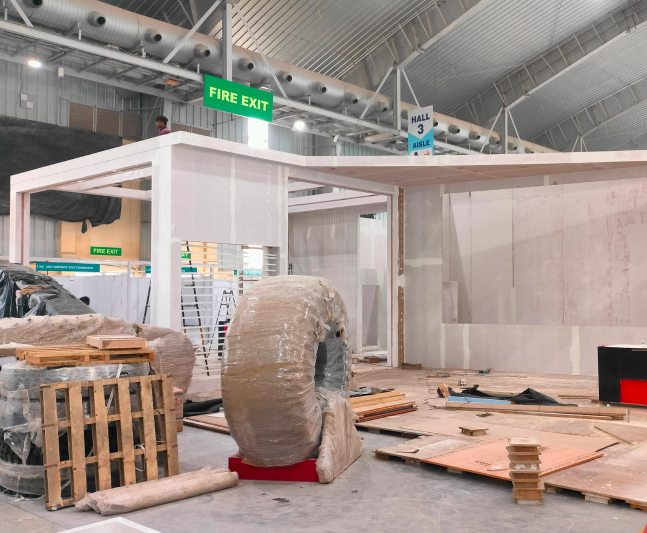
On-site installation is the most time-sensitive stage of trade show execution, where weeks of planning come together under tight deadlines and strict venue schedules. This phase requires seamless coordination between multiple teams, including carpenters, electricians, rigging specialists, and graphics installers, all working in parallel to bring the exhibition booth design to life. Effective on-site construction management ensures that each element is installed in the correct sequence, while onsite project management keeps teams aligned and timelines on track.
Key activities during installation include structural assembly, electrical connections, rigging for suspended elements, and precise placement of graphics and branding. Real-world challenges are common—for instance, uneven flooring or last-minute venue restrictions may require quick adjustments to the booth structure. In such situations, real-time decision-making becomes critical to avoid delays. The ability to adapt on the ground while maintaining quality and design integrity is what ultimately ensures a smooth installation and a successful show-ready booth.
Show Days to Dismantling: Sustaining Performance Beyond the Build
Execution doesn’t stop once the booth is built. It continues throughout the live event, where the focus shifts to delivering a seamless and engaging experiential marketing booth. During show days, ensuring booth readiness is critical, from testing AV systems and lighting to maintaining smooth crowd flow and visitor interactions. Even minor disruptions, such as a screen malfunction during peak hours, can impact the overall brand-consistent booth experience. This is why ongoing attention to detail, quick troubleshooting, and alignment with brand messaging are essential to successful trade show execution, ensuring that every visitor interaction reflects strong brand alignment in events.
Once the event concludes, the focus moves to dismantling —an equally important yet often overlooked phase of exhibition booth design. This involves safe and systematic teardown, careful packing of components, and organized logistics for storage or return shipping. Efficient onsite project management ensures materials are handled without damage, especially when elements are intended for reuse. For example, modular structures or branded panels can be repurposed across multiple exhibitions, reducing costs and supporting sustainability goals. Thoughtful post-show management not only protects assets but also extends the lifecycle and value of the booth investment.
Managing the unexpected and how to mitigate
Even with careful planning, several risks can impact trade show execution. The key is not just identifying them, but having systems in place to manage them effectively:
- Delays in production or logistics
Risk: Late fabrication or shipping delays can disrupt installation timelines.
Mitigation: Build buffer time into schedules, track progress closely, and align timelines across teams. - Miscommunication between stakeholders
Risk: Inconsistent information between designers, fabricators, and on-site teams can lead to errors in the final exhibition booth design.
Mitigation: Maintain clear documentation, centralized communication channels, and regular check-ins. - Technical failures (AV, lighting, electricals)
Risk: Malfunctions during the event can affect visitor engagement and booth performance.
Mitigation: Conduct pre-show testing, have backup equipment ready, and ensure technical support is available on-site. - On-site constraints and last-minute changes
Risk: Venue restrictions or unexpected site conditions can impact installation.
Mitigation: Strong onsite project management enables quick adjustments and real-time problem-solving. - Damage to materials or components
Risk: Poor handling during transit or installation can affect booth quality.
Mitigation: Use protective packaging, detailed inventory checks, and careful handling protocols.
With structured processes and experience, these challenges can be anticipated and managed effectively—ensuring that even under pressure, execution remains smooth and reliable.
Case Study: ITR for Excon’25
ITR had a clear vision for Excon, the biennial Southeast Asia construction trade fair. They wanted an experiential space that could simultaneously showcase machinery, host meaningful conversations, and provide hospitality for their key Indian customer base. The challenge was balancing bold brand visibility with functional spaces for serious business engagement.
Through turnkey booth solutions, our exhibitions team at Blues N Coppers designed and delivered a striking 400 sqm exhibition booth design that stood out in the crowded hall. The structure used clean, straight-line architecture wrapped in ITR’s signature red and black palette, ensuring a brand-consistent booth experience visible from multiple aisles. The layout opened toward an L-shaped aisle to maximize product visibility while carefully zoning engagement areas from an inviting coffee bar for casual visitors to private meeting rooms and a secluded hospitality lounge for key clients.
With meticulous planning and seamless trade show execution, the booth not only drew strong foot traffic but also enabled deeper client interactions, helping ITR convert exhibition visibility into meaningful business relationships.
The Power of Seamless Execution
Executing an exhibition booth design is a complex, multi-layered process that spans planning, production, logistics, installation, and live event management. Each stage is interconnected, and even small gaps in coordination can impact timelines, costs, and the final outcome. This is why seamless execution depends on bringing together creative, technical, and operational expertise in a structured and aligned way.
Working with an experienced design-build agency offering end-to-end exhibition services brings clarity to this complexity. With a well-coordinated approach to turnkey event design, brands benefit from greater reliability, consistent quality, and smoother execution across every stage. As an event production partner, the value lies not just in delivering the booth, but in ensuring that every element works together cohesively—resulting in a confident, high-impact presence on the show floor.
At Blues N Coppers, our team owns full execution ownership. This enables companies to deliver a confident, high impact boot that not only attracts attention on the show floor but also strengthens long -term brand perception.
FAQ
1. What does exhibition booth execution actually include?
It covers the full process—from planning and fabrication to logistics, installation, live support, and dismantling.
2. How long does it take to execute an exhibition booth?
Typically a few weeks to months, depending on complexity, with installation completed in a few days.
3. What are the most common challenges during trade show execution?
Delays, miscommunication, technical issues, and venue constraints are the most common risks.
4. How are exhibition booths transported safely?
Components are securely packed, labeled, and shipped with coordinated logistics and proper documentation.
5. What happens after the exhibition ends?
The booth is dismantled, packed, and either stored or reused for future events.
6. How can brands ensure smooth booth execution?
Through detailed planning, clear coordination, and proactive management across all execution stages.