.svg)

“We want a booth that stands out in a crowded hall.”
It’s one of the most common lines in any exhibition booth design brief, and it makes complete sense. On a busy exhibition floor, visitors often spend just a few minutes at each booth, and you have only 4 seconds to catch their attention. Naturally, brands come in with a strong brand vision—ideas that are bold, creative, and meant to make an impact.
But this is where the challenge begins. A great concept on paper doesn’t always translate to the floor. Experiential design involves many moving parts: layout, materials, flow, lighting, and real-world constraints. In fact, industry insights suggest that a majority of exhibitors face execution challenges that affect booth performance. On the flip side, a well-designed and well-executed booth can increase the chances of converting passive visitors into active customers by as much as 40%. What starts as a powerful idea can sometimes lose clarity when it meets practical limitations, leaving gaps between what was imagined and what is finally built.
The idea itself is rarely the problem. Brands usually have a clear sense of what they want to say and how they want to be seen. The real challenge lies in translating that vision into something that works in a physical space. You want something that feels intuitive, engages visitors, and holds up in real-world conditions. This is where the role of the right exhibition partner becomes important.
Rather than working with disconnected vendors across different stages, many brands are now looking for a design-build agency that can carry an idea from creative concept to execution. Not to take control away from the brand, but to ensure that the vision stays intact as it moves from design to build to on-site delivery. In this article, we’ll look at how to approach this kind of partnership and what to keep in mind to create a smoother, more effective exhibition experience.
What Does a Design-Build Partnership Actually Mean?
At its core, a design-build partnership is about continuity. Instead of splitting the process across different teams, one partner stays involved from the initial conception all the way to the final execution. That means the same team that understands the concept also contributes to how it’s designed, built, and delivered on-site. This kind of approach is often referred to as a turnkey exhibition solution, where everything is connected rather than handled in parts.
This doesn’t necessarily mean doing more; it means reducing gaps. When there is clear project ownership, decisions tend to be more aligned, and the intent behind the design is easier to carry through into booth fabrication and final setup. The goal is not to control every step, but to make sure that what was imagined is what actually gets built and experienced.
This model has become more relevant as exhibitions themselves have become more complex. Booths today are no longer simple displays; they involve multiple zones, interactive elements, lighting, technology, and tight timelines. Managing all of this across different teams can be challenging, especially when each part depends on the other. In many cases, vendor coordination becomes a major task in itself.
This is where a more connected approach helps. With better timeline management and a clearer line of responsibility, the overall exhibition execution becomes smoother. It’s less about changing how things are done and more about making sure everything works together the way it should.
Where Things Usually Go Wrong
This is where things usually start to go off track. One of the most common exhibition mistakes is when a design looks great on screen but isn’t practical to build. What works in a render doesn’t always hold up in real-world conditions, leading to compromises during sourcing, fabrication, and installation. Then come execution gaps like missed details, uneven finishes, or last-minute fixes that take away from the overall experience. Miscommunication between teams can make this worse, especially when different people are handling design, production, and installation. These build challenges may seem small on their own, but together they can disrupt the flow of the booth and dilute the original idea. By the time everything comes together on-site, the final result often feels different from what was first imagined.
These gaps don’t just affect the booth; they affect how people see the brand. In experiential marketing, the booth is the first real interaction a visitor has with a brand. They make quick judgments based on what they experience in the space. In fact, studies suggest that over 76% of attendees form their brand perception based on booth experience alone. Small issues like poor finishes, cluttered layouts, or inconsistent messaging can create doubt, even if the brand itself is strong. This is where brand alignment becomes critical: everything from design to execution needs to feel cohesive and intentional. Brand alignment reinforces credibility without needing to say much at all.
How a Strong Partner Translates Vision
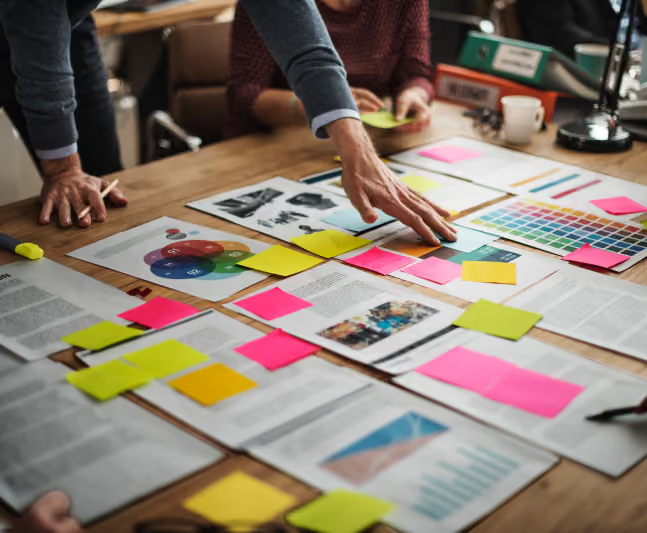
The process usually begins with understanding what the brand is trying to achieve for this participation. At this stage, the vision is often broad ideas around how the brand should feel, what it should communicate, and the kind of experience it wants to create. Translating this into something tangible requires careful interpretation. It’s not just about what is said in the brief, but also what sits behind it. This is where brand alignment becomes important, making sure the space reflects the brand’s identity in a way that feels natural and consistent. A strong creative concept often comes from asking the right questions early on, clarifying priorities, and identifying what really needs to stand out.
Once the direction is clear, the next step is shaping it into a workable design. This is where ideas start taking form through layout, structure, and flow. Good exhibition design is about how people move through the space and what they notice first. Thoughtful spatial planning helps create clear zones, guiding visitors from one interaction to the next. At the same time, the design needs to balance creativity with practicality. What looks impressive should also be buildable and functional. When done well, this is what turns concepts into immersive environments that are both engaging and easy to navigate.
The final step is execution, where the design is translated into a real, physical space. This involves booth fabrication, material selection, and managing the realities of on-site installation. Timelines are tight, conditions can change, and multiple elements need to come together smoothly. This is where precision matters. Even small errors can affect the overall experience, so attention to detail is critical. Strong on-site management ensures that what was planned is what gets delivered, without unnecessary compromises.
The Role of Ownership
As projects become more complex, the idea of project ownership starts to play a bigger role. When one team is responsible for carrying the project from concept through to execution, there is usually a clear line of accountability. Decisions are easier to track, and there are fewer gaps between what was designed and what gets built. A turnkey solution can help reduce friction across stages—design, fabrication, and installation—because everything is more closely connected. This doesn’t necessarily change the vision itself, but it does make it easier to protect that vision as it moves through different phases. In many cases, this continuity is what helps maintain consistency and avoid last-minute compromises.
That said, this approach isn’t always necessary for every project. Simpler booths or smaller activations can work well with separate teams, especially when the scope is limited. But as the scale increases, with more elements, tighter timelines, and multiple locations, the value of a more connected approach becomes clear. It allows for flexible execution while still keeping everything aligned. For brands that are planning across multiple events or markets, this also supports more scalable exhibition spaces that can be adapted without losing consistency. In the end, it’s more about understanding what the project needs and structuring it to deliver the planned outcome.
What to Look for in the Right Partner
One of the first things to look at is past work. A partner with industry experience will have handled different types of projects across scales, formats, and industries, which helps them anticipate challenges early. It’s not just about how a booth looks in photos, but how it performed on the floor. Did it handle footfall well? Was it executed cleanly? Did it stay true to the original idea? An experienced partner brings this kind of practical understanding to the table. They know what tends to work, what doesn’t, and how to adapt ideas without losing intent. This kind of experience often shows up in small decisions that make a big difference during execution.
“A planned process that anticipates hitches in execution is just as important as creative capabilities of design.” Says Viral Momaya, Senior Project Manager. “From the start, there should be a defined way of working: how ideas are developed, how approvals happen, and how changes are managed. Strong timeline and budget management helps avoid last-minute surprises, especially in projects where deadlines are tight.”
She insists that transparent communication also plays a key role. Regular updates, defined responsibilities, and quick responses can prevent small issues from becoming bigger problems. When multiple teams are involved, effective vendor coordination becomes even more critical. A structured approach doesn’t limit creativity; it supports it by making sure everything moves forward smoothly.
Beyond execution, it’s important that the partner truly understands your brand. This goes beyond using the right colors or logos. You want it to be about capturing the tone, the message, and how the brand should breathe in a physical space. Strong brand alignment ensures that every element, from layout to materials, supports a consistent story. Over time, this consistency helps build familiarity and trust, especially when your field teams are aligned on the value propositions visualized at the booth.
A Dynamic, Futuristic booth with Accurub
Accurub came in with a clear intent of moving beyond their existing aesthetic while staying rooted in what their customers valued most: their products. They wanted a space that felt industrial and dynamic, yet warm and inviting, reflecting the brand’s strong emphasis on hospitality. The challenge was bringing these contrasting elements together in a way that felt balanced and natural, while also ensuring the booth stood out in a crowded exhibition hall and allowed easy movement for visitors.
Blues N Coppers transformed the 195 sqm space into a high-engagement environment for the automotive community. Inspired by Accurub’s products, the booth adopted an industrial-modern aesthetic using angular, geometric forms, softened with beige wooden flooring and warm lighting. The space was thoughtfully divided into three zones—an open area for casual visitors,
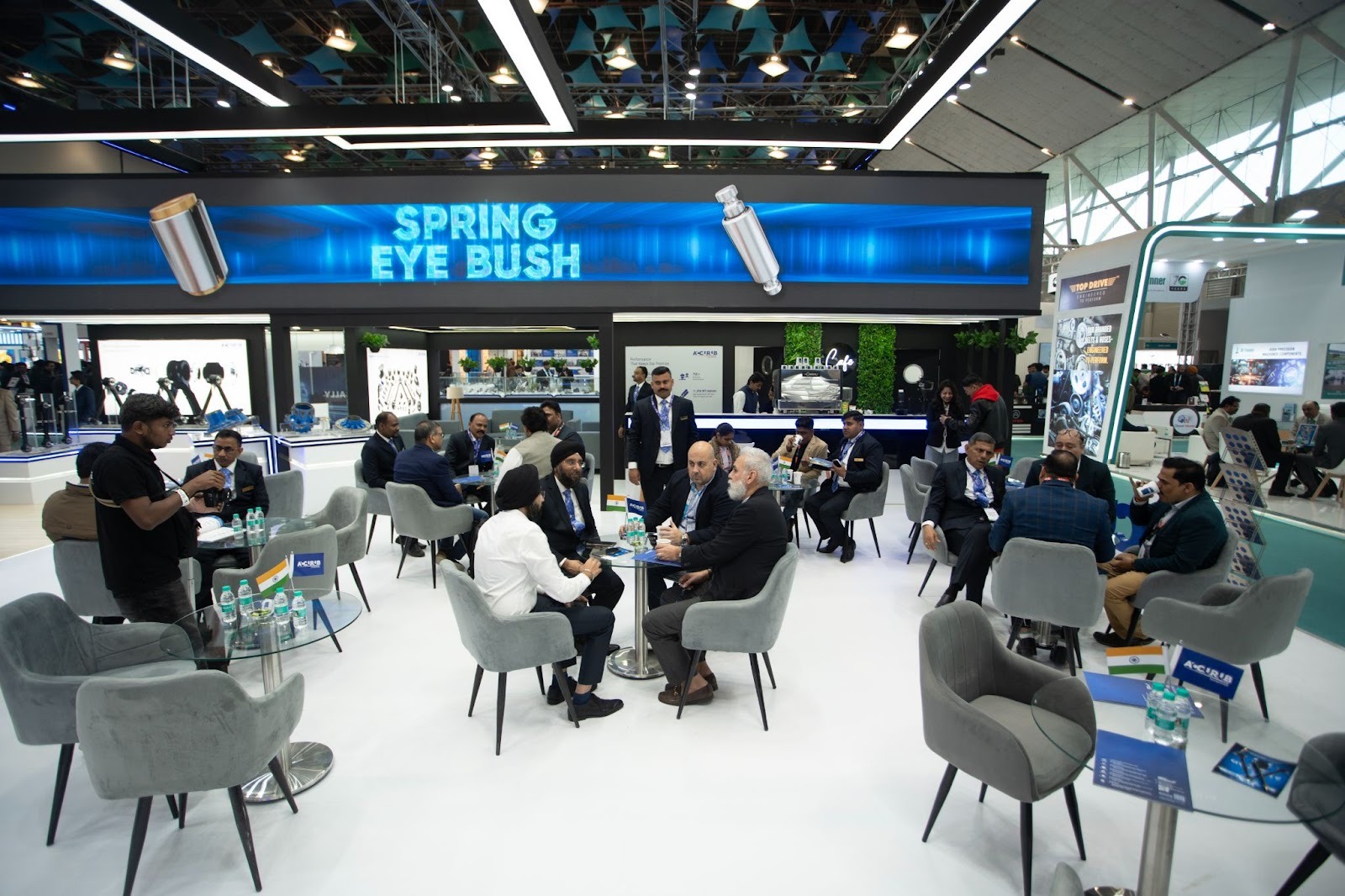
a semi-engagement zone for potential collaborations,
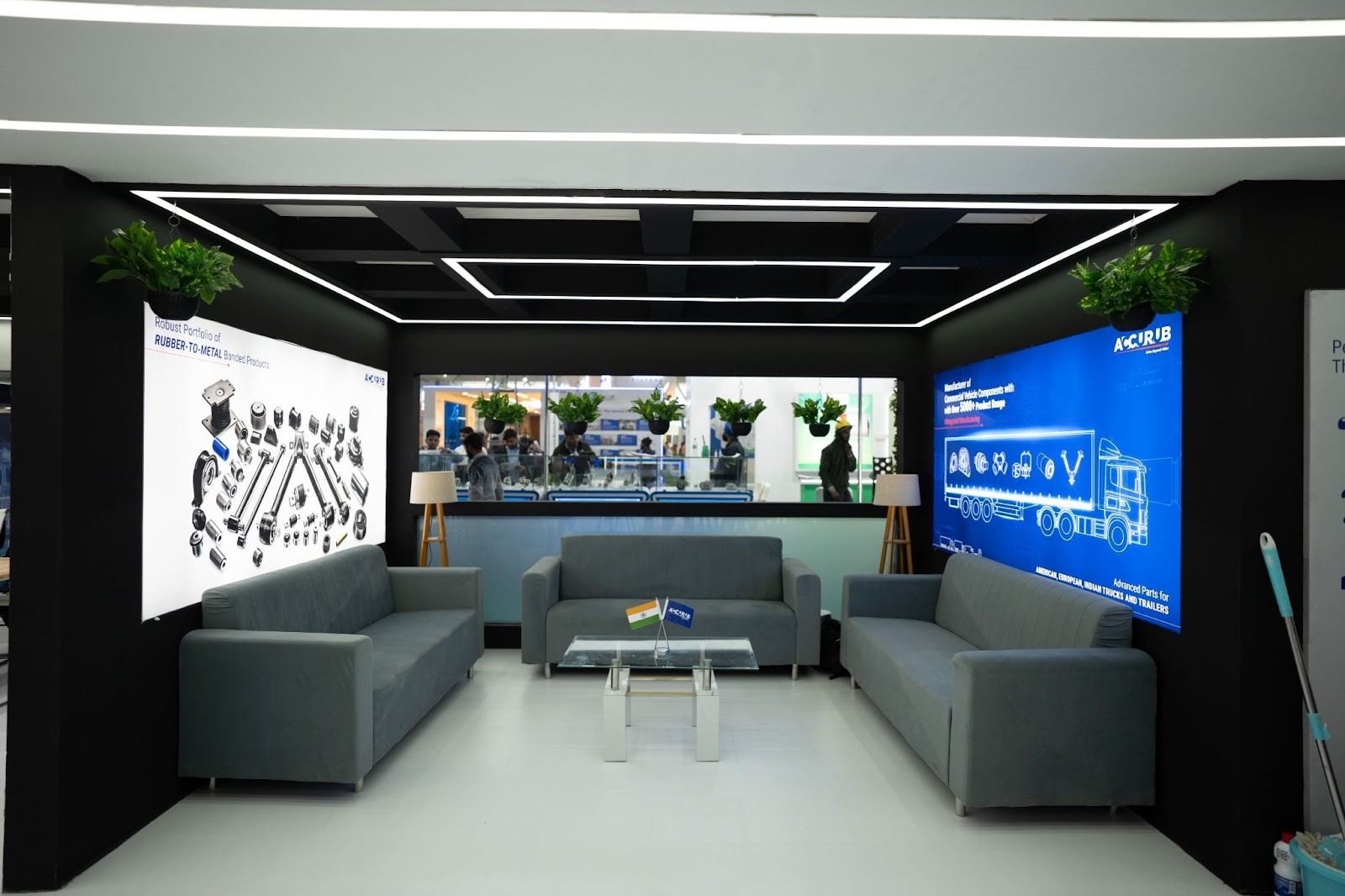
and a private meeting room for deeper business conversations.
A striking LED band across the fascia, along with a visually anchored LED booth element, helped the space stand out on the show floor. The result was a booth that not only drew attention but also encouraged longer dwell time, meaningful interactions, and stronger engagement.
Simple Framework
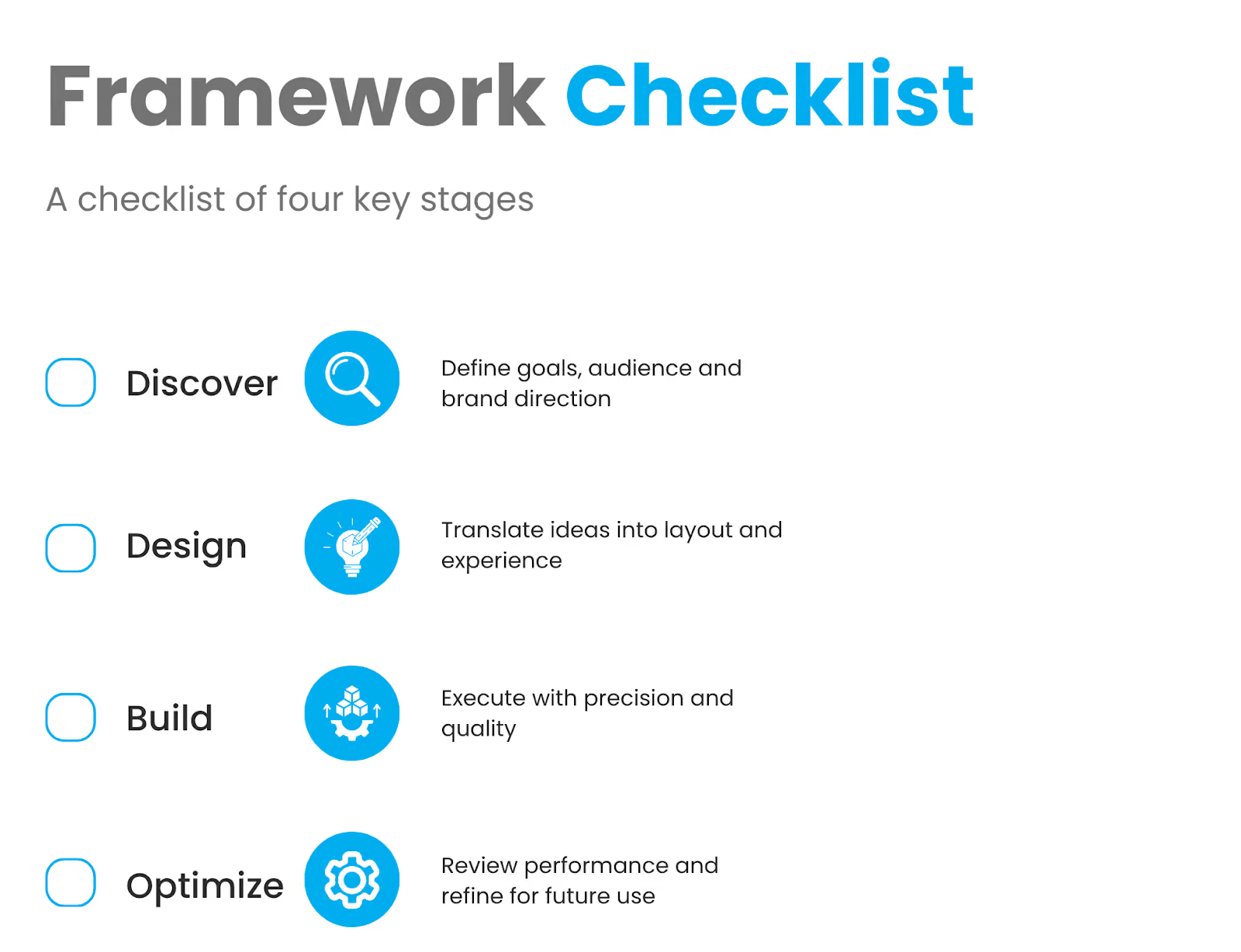
To make this easier to apply, it helps to think in terms of a simple framework that guides the entire process. Most successful projects follow a version of four key stages: Discover, Design, Build, and Optimize. The first step focuses on understanding the brand and defining clear goals. The second translates those ideas into a workable design through layout and storytelling. The third is where everything comes together through fabrication and on-site execution. And finally, optimizing looks at how the space performed and what can be improved for future events. This kind of structured approach forms a practical exhibition strategy, ensuring that nothing is missed along the way. When followed well, it creates a smoother turnkey process that keeps the vision intact from start to finish.
Conclusion
At the end of the day, it’s not just the idea that defines an exhibition space, but also how well that idea is translated into reality. A strong concept is as important as how clearly it comes through in the final build. When design, materials, layout, and execution all align, the space feels intentional and easy to connect with. But when there are gaps, even a good idea can lose its strength. This is why the process behind the scenes matters just as much as the creative direction. The goal is not to do more, but to ensure that what was imagined is what people actually experience on the floor.
At Blues N Coppers, we always step back and let your vision be the north star - not just in concept, but in execution. The right approach, and the right people involved at each stage, can make that journey smoother and more effective. Whether it’s a small activation or a large-scale presence, being thoughtful about how everything comes together can make a noticeable difference in the final outcome.
FAQs
1. What is a design-build partnership in exhibition projects?
It’s an approach where one team handles the process from concept to execution, ensuring better alignment between design, build, and on-site delivery.
2. How does a partner translate a brand idea into a physical booth?
By understanding the brand’s goals and turning them into a clear layout, materials, and visitor journey that works in a real-world setting.
3. Do I always need a full-service partner for my exhibition booth?
Not always. Simpler projects can work with multiple vendors, but complex booths often benefit from a more integrated approach.
4. What are the biggest challenges in exhibition booth execution?
Common challenges include designs that aren’t buildable, execution gaps, and miscommunication between different teams.
5. How can I ensure my booth stays consistent with my brand?
Work with a partner who understands your brand deeply and ensures that design, materials, and messaging stay aligned throughout the process.
6. What should I look for when choosing an exhibition partner?
Look for experience, a clear process, strong communication, and the ability to carry an idea through from concept to execution without losing intent.