.svg)


Walk into any exhibition hall, and you’ll see rows of impressive booths: bold structures, vibrant graphics, and carefully curated displays. Yet, by the end of the event, only a handful of these booths will have truly delivered results.
The difference rarely comes down to effort. If your approach is strategic, your effort is well directed.
Most brands fail because of a few critical gaps that undermine the entire experience once the booth goes live. A lot of these are often invisible during planning. So you’re going to want to do more than rely on your sixth sense.
Understanding Why Exhibition Booths Underperform
An exhibition booth is supposed to be a live environment where brand perception, engagement, and business outcomes converge in real time.
But when planning, design, and execution aren’t aligned, the booth stops functioning as a strategic asset. Consider this: a marketing team plans to showcase a new product line through guided demos. The design team builds an open, visually striking booth with multiple entry points. On the show floor, however, execution prioritizes static displays and product placement over demo flow. There’s no clear pathway, no defined interaction point, and no staff alignment on how visitors should move through the space.
The result is predictable. Visitors walk in, glance around, and move on. Conversations stay surface-level because there’s no structured experience to guide them. Even with strong footfall, the leads lack intent, making ROI difficult to justify.
Booth underperformance rarely comes from one big mistake. It usually comes from small misalignments between planning, design, and execution and that’s what makes it easy to overlook.
Common Trade Show Mistakes That Quietly Kill Booth ROI
1. Designing Without Considering Execution Reality
While a concept may look impressive in a 3D render, real-world constraints often tell a different story. Materials behave differently, structures require support, timelines get compressed, and venue regulations come into play.
You don’t want to find out on show day that your structure needs an extra pillar that was not accounted for. As Viral Momaya, our project manager, inputs, “We run tests on our designs before sending it forward. You don’t want to overlap aspiration with imagination.”
When design decisions are made without input from execution teams, on-site compromises inevitably occur, and these are often visible to visitors. What begins as a design oversight ultimately turns into a perception issue, affecting how the brand is experienced.
The way to avoid this is simple in principle but critical in practice: bring execution thinking into the design stage itself. When feasibility, materials, and on-ground constraints are considered early, the outcome performs seamlessly on the show floor.
2. Brand Inconsistency Across the Booth
Brand inconsistency across the booth can significantly weaken its overall impact. A booth is a physical expression of your brand, and when visuals, messaging, and the overall experience don’t align, it creates friction for the visitor. Instead of clearly understanding what your brand stands for, they are left trying to piece together disconnected elements.
In a fast-paced exhibition environment, confusion quickly leads to disengagement, making it far easier for your brand to be forgotten.
A practical way to avoid this is by anchoring your booth around a single hero showcase and a clear central message. This becomes the reference point from which everything else flows: design, communication, and engagement. While you may have multiple products or offerings, aligning them under one core narrative creates clarity.
It not only helps visitors grasp your brand quickly but also aligns your internal team. Conversations become more focused, the booth develops a cohesive energy, and visitors are naturally guided into deeper, more meaningful interactions, without feeling overwhelmed.
3. Focusing Only on Aesthetics
Focusing only on aesthetics is a common mistake that limits a booth’s effectiveness. While a visually appealing booth can attract attention, it doesn’t guarantee meaningful engagement. Without clear interaction points, conversation triggers, or intentional spatial planning, the booth remains something visitors simply observe rather than actively experience. Aesthetic appeal may help you get noticed, but it is strategic design that ultimately drives results.
4. Relying on Trends
It’s easy to get drawn into what’s currently trending, whether it’s VR experiences, gamified zones, or high-tech installations. But when trends drive decisions instead of strategy, the result often feels forced rather than effective.
The difference lies in how the planning is approached. Tactical planning focuses on what to execute and how to execute it. Strategic planning, on the other hand, starts with why it matters, aligning every decision with the long-term goals of the brand and the expectations of the audience.
Many booths fall into the trap of adopting trends without context. A VR cricket game might attract attention, but if it has no connection to your brand story or offering, it distracts more than it engages.
The real shift happens when you start with the visitor. What are they coming to understand? What kind of interaction would make their time meaningful? When engagement zones are designed around these questions, they move from being gimmicks to becoming purposeful touchpoints.
When there is no clear objective guiding the booth, everything else becomes reactive. There’s no defined visitor journey, no structured engagement flow, and no clarity on what success should look like.
As a result, the booth may attract footfall, but it fails to convert that attention into meaningful interactions.
5. Poor Execution Quality
With the execution phase, there are always a lot of moving parts. Artworks are being resized to fit the real booth wall, you are sourcing functional elements for the seating area, and the lighting seems off. All of these ssues like misaligned panels, unfinished edges, inconsistent lighting, or poor-quality materials may seem minor internally, but visitors notice them immediately. Poor execution quality is where the gap between intent and reality becomes most visible.
As Rushi Tanna, our project lead, points out, “Visitors may not know what went wrong, but they can always sense when something feels off.”
More importantly, visitors don’t separate booth quality from brand quality. If the booth feels incomplete or poorly executed, it directly impacts how reliable and professional the brand fared.
Practical Ways to Avoid These Mistakes (And Build a High-Performing Booth)
Avoiding these pitfalls doesn’t require complexity; it requires clarity, alignment, and a shift in how decisions are made.
1. Start With Clear Objectives
Starting with clear objectives is critical before any design work begins. Brands need to define what success actually looks like whether that’s generating leads, educating visitors about a product, or building relationships. This clarity influences every decision that follows, from booth layout and messaging to staffing and engagement approach. Without a defined goal, even a well-designed booth can feel directionless and struggle to deliver meaningful results.
2. Align Design With Execution From Day One
Aligning design with execution from day one is essential to avoid gaps that often arise when design happens in isolation. “ High-performing exhibitors bring execution thinking into the early stages, considering factors like material feasibility, structural logic, and installation timelines alongside the creative concept” adds Rushi.”This integrated approach minimises last-minute fixes and ensures that what was designed on screen can be delivered effectively on the show floor. After all, good design may look impressive in theory, but great design is what holds up in real-world conditions.”
3. Plan the Visitor Journey
Planning the visitor journey is what separates average booths from high-performing ones. While most booths are treated as static spaces, effective booths are designed as guided experiences—where every step of the visitor’s movement is intentional. This means thinking through how someone enters the booth, what captures their attention first, where they naturally pause, and where meaningful conversations can take place.
This is where a subtle but powerful strategy comes into play: zoning.
For example, the first 3–4 meters of the booth can function as a low-pressure welcome zone, with an open layout, bold visuals, and just enough information to spark curiosity. Here, staff should initiate casual, open-ended conversations rather than sales pitches, while observing cues like who lingers, asks questions, or engages with materials.
Deeper inside the booth, a more private, high-value conversation zone can be created using semi-private seating or small meeting areas, signalling a shift in interaction depth. The transition between these zones is critical guiding an interested visitor with a soft invitation into a quieter space helps move the interaction from casual browsing to focused discussion. This simple shift naturally filters serious prospects from general footfall, significantly improving the quality of conversations and overall ROI.
4. Maintain Brand Consistency Across Every Element
Maintaining brand consistency across every element of the booth is essential for creating a clear and memorable experience. Consistency builds clarity, and clarity strengthens recall. This means aligning visual identity, messaging tone, and the overall spatial experience so that every touchpoint communicates the same story. When all elements work together cohesively, visitors don’t have to interpret or piece together what your brand represents they understand it intuitively through the experience itself.
5. Focus on Engagement, Not Just Appearance
Focusing on engagement rather than just appearance is what drives real booth performance. Instead of only asking whether the booth looks visually appealing, the more important question is what visitors will actually do within the space. Will they interact with something, start a conversation, or stay long enough to engage meaningfully? High-performing booths are designed to encourage participation and interaction, not just to attract attention for a few seconds.
6. Test and Refine Before Show Day
Testing and refining before show day is a step many overlook, yet it can make a significant difference in final performance. Most issues don’t arise from poor ideas, but from ideas that haven’t been validated in real-world conditions. Walking through the booth internally, simulating visitor movement, and identifying potential friction points can reveal gaps that aren’t obvious during planning. Addressing these early helps prevent visible problems on the show floor.
.jpg)
What High-Performing Exhibitors Do Differently
High-performing exhibitors approach their booths differently in a way that may seem subtle, but has a significant impact. Instead of focusing on how the booth should look, smart marketers know to focus on how the booth should function. They treat the booth as a system where strategy, design, and execution work together to guide visitor behaviour and shape outcomes. This shift in thinking is often what separates underperforming booths from those that consistently deliver meaningful engagement and results.
For example, participating brands often invite their customers to visit them. When you know there will be intended footfall, the first motive of the brand is to be picked first, no matter if they were invited by other brands.
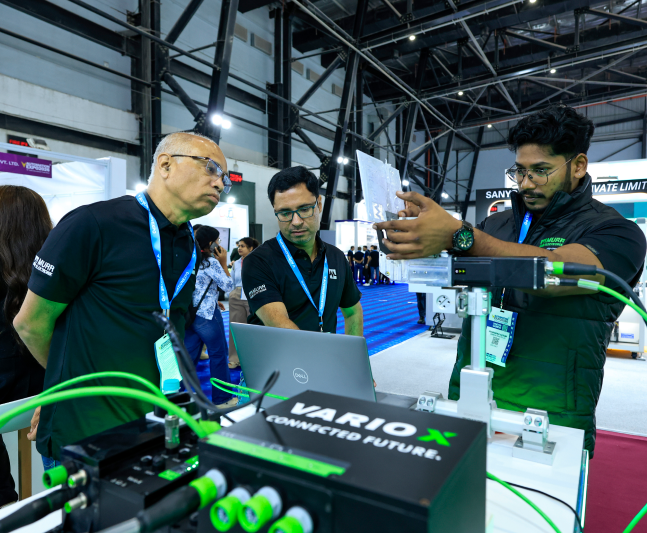
The step doesn't end with just getting picked or a quick conversation. A high-performing booth will have a planned buyer journey that the visitor is attracted to engage in. In our collaboration with ITR, that’s exactly what we planned and achieved.

The outer section of the booth was treated as a product showcase so that visitors were attracted by value first. Then, as they moved to the inner sanctum of the booth, they could indulge in hospitality and have deep, meaningful conversations about their pain points and solutions.
If you plan and execute a high-performing booth well, you may just attract your competitors' buyers and start fresh with them.
Bringing It All Together: From Presence to Performance
At its core, an exhibition booth is about visibility, but more importantly, your target audience taking the desired action you have set as your goal. To fullfill this your strategy has to define intention. Design has to shape interaction. Execution has to complete the experience. When these three align, the booth becomes more than a display. You now have a high-performing environment that attracts the right people and enables meaningful conversations.
At Blues N Coppers, we approach every project with clarity, understanding the distinction between simply showing up and actually making an impact.
FAQs
1. How do I nail the design without it disrupting execution?
With strategic planning and execution aligned with the real world, a visually appealing booth alone may not engage visitors effectively or support business goals.
2. How does poor execution impact exhibition booth performance?
Execution quality directly affects how visitors perceive the brand. Incomplete finishes or inconsistencies can reduce credibility and weaken engagement.
3. What is the biggest mistake brands make when planning a trade show booth?
Focusing only on aesthetics instead of defining clear objectives and visitor engagement strategies, which leads to low interaction and unclear outcomes.
5. What should come first: booth design, execution, or strategy?
Strategy should always come first. Design and execution should support a clear plan focused on achieving specific business outcomes.