.svg)


Every exhibitor wants the same outcome from a trade show:
- attract the right visitors,
- start meaningful conversations, and
- generate business opportunities.
Significant time and investment go into designing booths that stand out in increasingly competitive exhibition halls.
The challenge is that visibility alone doesn't guarantee engagement. Many visually impressive booths struggle to convert passing footfall into quality conversations because visitors don't know where to enter, what to explore first, or how to engage with the space.
So, what separates booths that simply attract attention from those that consistently generate sales conversations?
The answer often lies in the exhibition booth layout. A thoughtfully planned layout shapes how visitors move, interact, and feel within the space, making conversations happen naturally instead of forcing them. At Blues N Coppers, we've consistently found that the highest-performing booths aren't necessarily the biggest or the most elaborate; they're the ones designed around visitor behaviour, creating experiences that encourage exploration, build comfort, and lead to meaningful business interactions.
Visitors move through the space naturally
Think about walking through a supermarket. Wide aisles encourage exploration, while narrow, cluttered sections often make people keep moving. Exhibition halls operate in remarkably similar ways.
People rarely move through exhibitions randomly. Their movement closely resembles how shoppers navigate a well-designed retail store. They instinctively look for open paths, visible destinations, and environments that feel comfortable rather than crowded.
Understanding visitor flow and exhibition booth behaviour is therefore one of the most valuable aspects of successful exhibition booth planning.
Visitors generally display several predictable behaviours:
- They avoid entrances that appear blocked by furniture or staff.
- They gravitate towards open spaces with clear visibility.
- They hesitate before entering enclosed environments.
- They naturally follow wider walking paths.
- They pause where something visually interesting creates curiosity.
When exhibitors ignore exhibition booth traffic flow, congestion often develops at the entrance. Visitors waiting to watch a demonstration unintentionally create a barrier that discourages others from entering.
On the other hand, thoughtful circulation design allows people to move naturally between product displays, demonstrations, and discussion spaces without feeling rushed or obstructed.
Navin Chandwani, Co-founder of Blues N Coppers, says, “If every visitor instinctively understands where to begin, where to explore next, and where discussions can happen - that’s a well-designed, intuitive exhibition booth space.”
This behavioural approach transforms passive visitors into active participants.
Why Booth Layout Matters More Than Size
It’s not that booth sizes don’t matter; they do.
Larger spaces create more opportunities for visibility, demonstrations, and meetings. However, size alone rarely determines exhibition success.
What consistently drives results is a booth layout that supports visitor behaviour, aligns with business goals, and encourages meaningful interactions. Visitors rarely judge a booth by its square footage; they judge it by how approachable and intuitive it feels.
Research from the Center for Exhibition Industry Research (CEIR) shows that visitors form first impressions within seconds. If a booth feels crowded or confusing, many simply walk past.
A large booth with enclosed spaces and blocked entrances can discourage engagement, while a smaller booth with open pathways and clear interaction zones often attracts longer visits and better conversations.
When booth size, visitor flow, and functionality work together, the result is a booth that performs well regardless of its footprint. You can read more about why exhibition stand design and layout matter more than size.
Booth Layout Elements That Encourage Sales Conversations
Great conversations rarely happen by accident. They are carefully enabled through thoughtful spatial planning:
- Open Entrances
The entrance sets the emotional tone for the entire experience.
Instead of creating a checkpoint with reception desks or promotional counters, remove unnecessary physical barriers. Visitors should feel invited rather than assessed.
An open entrance communicates confidence while reducing the psychological commitment required to step inside.
- Visible Product Demonstrations
People are naturally attracted to activity.
Positioning live demonstrations where they are visible from the aisle creates curiosity without demanding immediate engagement.
Rather than asking visitors to commit to a conversation immediately, demonstrations give them a comfortable reason to pause and observe.
This gradual engagement often produces far more qualified discussions than aggressive sales approaches.
- Dedicated Conversation Zones
Every visitor isn't ready for the same level of interaction.
An effective exhibition booth layout separates the booth into distinct engagement spaces:
- Browsing area
- Demonstration zone
- Interactive experience area
- Consultation tables
- Private meeting rooms
Visitors should never feel they are interrupting staff simply by entering the booth.
Instead, the environment should allow them to explore independently before choosing when they're ready to engage.
- Comfortable Meeting Spaces
Sales conversations often require privacy. However, it need not mean isolation.
Semi-private seating inside the booth encourages visitors to continue discussions without feeling exposed to surrounding crowds.
Even subtle design elements such as acoustic panels, softer lighting, or strategically placed greenery can dramatically improve conversation quality.
Visitors often interpret comfortable meeting environments as indicators of professionalism and trustworthiness.
- Strategic Product Placement
One of the biggest layout mistakes is placing the most valuable products directly at the entrance.
Instead, position hero products further inside the booth. This rewards exploration.
As visitors move through the space, they experience a natural progression of discovery, increasing both dwell time and emotional investment.
Retail stores have used this strategy for decades because people value discoveries they actively make.
Exhibition spaces benefit from the same behavioural psychology.
- Designing a Clear Visitor Journey
An effective exhibition booth layout guides visitors through a natural sequence rather than presenting everything at once. The strongest booth designs typically follow this progression:
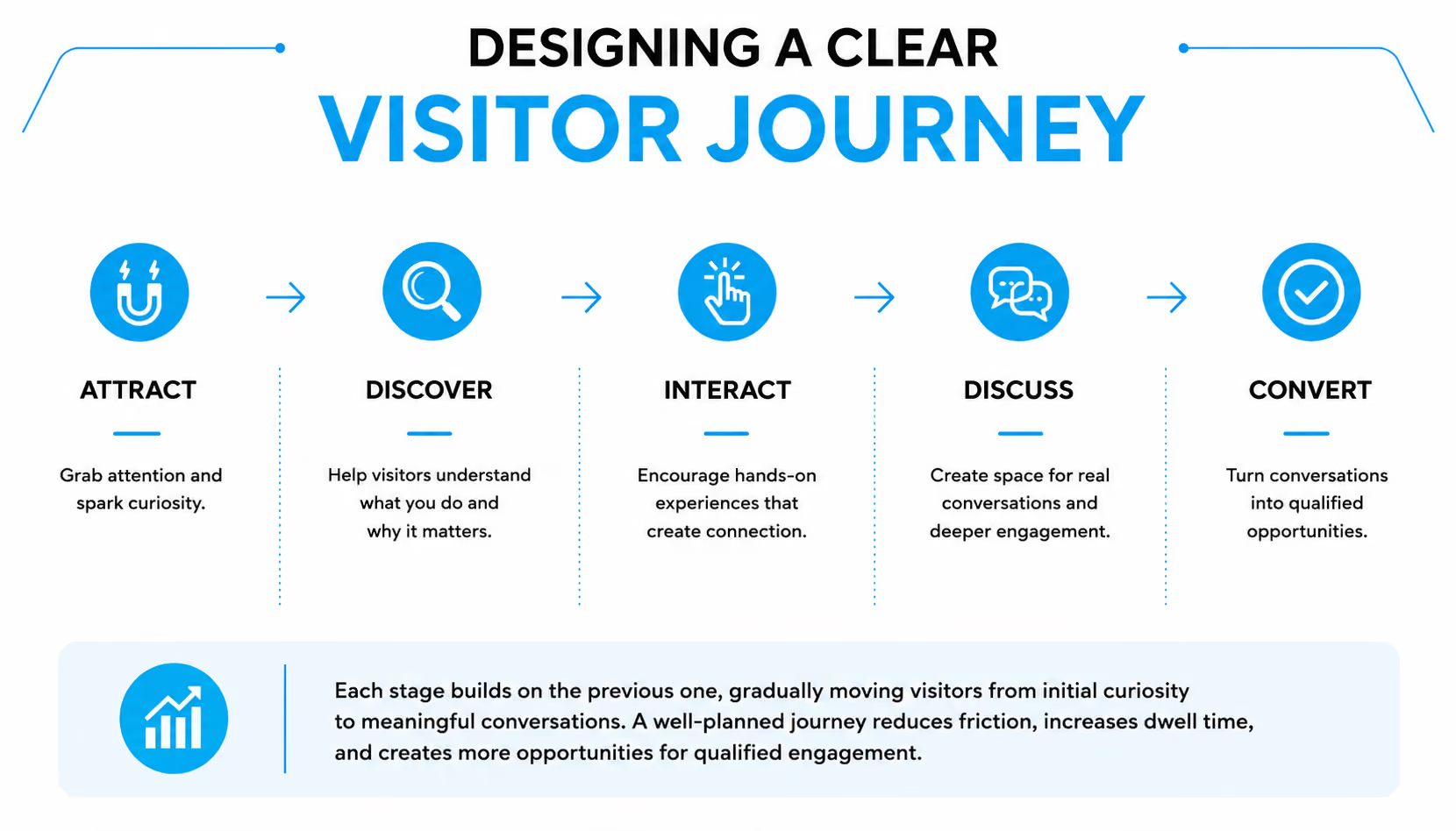
Each stage builds on the previous one, gradually moving visitors from initial curiosity to meaningful conversations. A well-planned journey reduces friction, increases dwell time, and creates more opportunities for qualified engagement.
Common Layout Mistakes That Reduce Sales Opportunities
Even visually attractive booths can unintentionally discourage conversations.
Some of the most common mistakes include:
- Too many product displays — Information overload makes exploration exhausting.
- No dedicated meeting area — Serious conversations compete with surrounding distractions.
- Dead-end layouts — Visitors avoid spaces where they fear becoming trapped.
- Hidden branding — Poor visibility reduces recognition before engagement begins.
- Inconsistent lighting — Dark corners subconsciously discourage movement.
- Crowded demonstration spaces — Visitors watching demonstrations unintentionally prevent others from entering.
Notice that none of these mistakes simply reduce traffic.
More importantly, they reduce the quality and frequency of conversations.
Integrating Booth Design with Sales Strategy
An effective exhibition booth design should never be created independently from the sales strategy.
Unfortunately, many organisations finalise layouts before discussing visitor objectives with their sales teams.
This disconnect often creates beautiful booths that struggle operationally.
Successful exhibition booth planning begins by asking questions such as:
- Where should initial conversations happen?
- Which products deserve demonstrations?
- How many staff members need simultaneous conversations?
- What type of visitor journey supports our sales process?
- Where should qualified prospects move after initial engagement?
When designers understand these answers early, the booth becomes an extension of the sales strategy rather than simply an exhibition space.
At Blues N Coppers, creative ideation frequently involves both creative teams and commercial stakeholders. This collaborative approach ensures that visitor pathways, interaction zones, demonstration areas, and meeting spaces all support business objectives from the outset.
Purposeful design isn't about aesthetics alone. It's about creating an environment where marketing, sales, and visitor experience reinforce one another.
Practical Tips Before Finalising Your Booth Layout
Before approving your final layout, walk through the booth as though you're attending the exhibition for the first time.
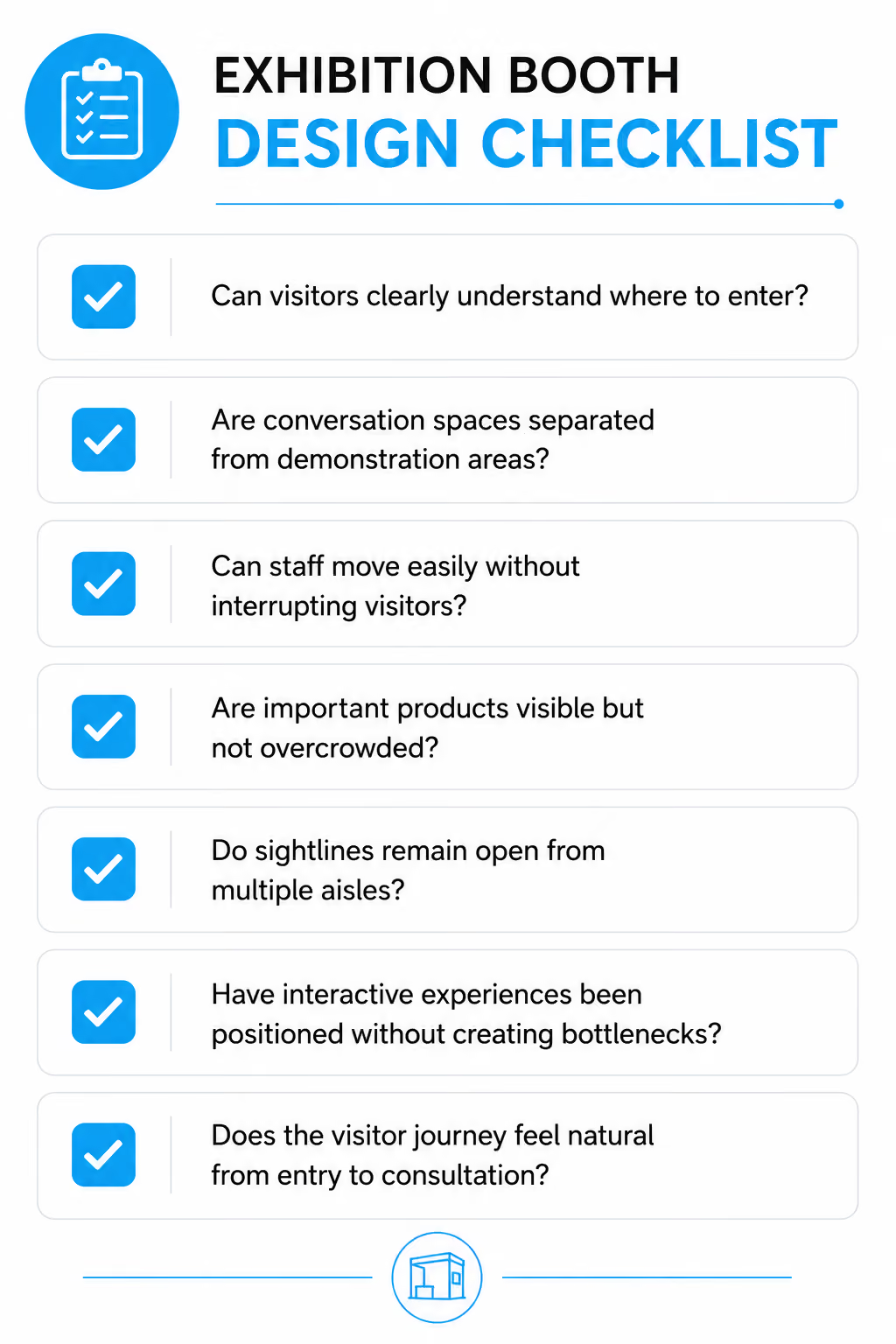
Even small adjustments during planning often produce significant improvements on exhibition day.
Conclusion
An attractive exhibition booth may capture attention, but attention alone doesn't generate business opportunities.
Meaningful conversations happen when visitors feel comfortable, curious, and confident enough to explore. That's why a thoughtfully designed exhibition booth layout isn't simply an architectural decision—it's a strategic business decision.
Across hundreds of exhibitions, Blues N Coppers has seen that the strongest-performing booths aren't built around decoration. They're built around behaviour. By understanding how visitors move, where they hesitate, and what encourages engagement, purposeful layouts help transform casual interest into productive business conversations.
If you're planning your next exhibition, consider how strategic booth layouts can help create more meaningful visitor interactions, stronger sales opportunities, and measurable business outcomes.
Frequently Asked Questions
How does an exhibition booth layout affect visitor engagement?
A well-designed exhibition booth layout removes barriers, improves visitor flow, and creates natural opportunities for interaction. Visitors are more likely to stay longer and engage with staff when the space feels welcoming and easy to navigate.
What booth layout encourages the most sales conversations?
Layouts that combine open entrances, visible demonstrations, dedicated conversation zones, and comfortable meeting areas typically generate the highest-quality discussions by allowing visitors to progress naturally from curiosity to engagement.
Should meeting areas be placed at the front or back of an exhibition booth?
Meeting spaces generally perform better toward the middle or rear of the booth. This allows visitors to explore first before moving into more focused business discussions.
How can small exhibition booths be designed for better lead generation?
Small booths benefit from clear zoning, vertical displays, open sightlines, minimal clutter, and strategic product placement. Intelligent spatial planning often outperforms larger but poorly organised spaces.
What are the most common booth layout mistakes exhibitors make?
Common mistakes include blocked entrances, overcrowded displays, poor visitor circulation, insufficient meeting spaces, hidden branding, and layouts that create congestion rather than encouraging movement.
How do exhibition booth design and visitor flow work together to improve ROI?
Thoughtful exhibition booth design supports natural visitor flow, increasing dwell time, improving engagement quality, and creating more opportunities for meaningful sales conversations. Better visitor experiences often translate into higher-quality leads and stronger exhibition returns.
How to calculate and compare sales conversations?
Calculate sales conversations by tracking meaningful, two-way discussions rather than total badge scans or foot traffic. Sales conversations can be calculate by dividing the number of conversions versus the total number of conversations you’ve had