.svg)

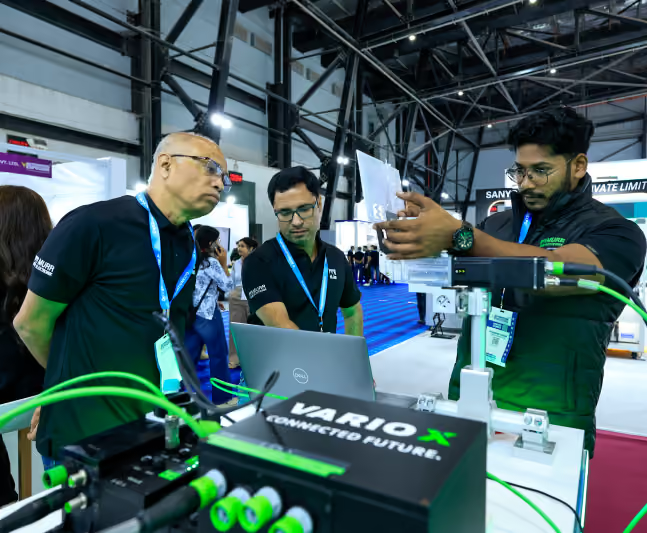
In every exhibition hall, hundreds of brands try to speak at once. Yet the ones that draw you in are more inviting without being loud.
Long before your team greets a visitor, your booth layout is already doing the talking. It guides people with light, space, and subtle cues, unfolding the curiosity step by step. The right layout doesn’t just hold your products; it holds attention. A well-designed layout acts like a silent salesperson mapping every visitor’s journey without saying a single word.
Understanding Exhibition Booth Layouts and Their Importance
An exhibition booth layout is more than a floor plan; it’s the physical story your brand tells. It defines how people enter, where they pause, and what they notice first. The right exhibition booth layout plan ensures smooth movement, clear visibility, and natural engagement.
A good layout creates balance between attraction and interaction. If a booth feels cluttered or confusing, visitors move on quickly. For instance, a tech brand may place its live demo zone near the centre to spark curiosity, while a lifestyle brand might use open corners to invite casual conversations.
Blues N Coppers often emphasises how subtle layout choices can influence dwell time. The longer visitors stay, the stronger the connection with the brand. The best layouts anticipate behaviour and guide visitors.
Common Exhibition Booth Layout Types
Choosing the right layout begins with understanding your space and goals. Every booth type serves a different purpose within an event environment. Here are the most common options:
.avif)
When designing an exhibition stand, consider the dimensions and configurations of these spaces, and review the 4 Types of Trade Show Booths. At Blues N Coppers, we recommend aligning the booth type with audience behaviour. For example, open island layouts for tech or experiential brands and structured inline ones for information-led displays.
Factors to Consider When Choosing a Booth Layout
A great design begins with clear intent. Before finalising your layout, think about:
Space and Location
Booth dimensions and placement within the hall decide how much visibility and traffic you’ll get. Corner or near-entrance booths tend to attract more visitors.
Visitor Flow
Plan pathways that feel natural. Avoid bottlenecks and make sure visitors can navigate comfortably.
Brand Objective
A product-focused brand may prioritise demo zones, while a service-led brand may need discussion spaces.
Equipment and Storage
Leave room for staff movement, hidden storage, and tech setups.
Accessibility
Keep the layout inclusive — ensure easy movement for all visitors.
Our designers at Blues N Coppers advise starting every exhibition booth layout plan with a walk-through mindset (imagine yourself as the visitor). What do you see first? What draws your attention? That’s where design meets psychology.
Designing Your Booth for Visitor Engagement
The best booth layouts and designs work hand in hand. Once your structure is set, it’s time to think about the small details that shape experience.
Flow
Design open pathways that guide visitors from entry to key engagement zones.
Signage and Lighting
Use lighting to highlight products and signage to guide movement naturally.
Interactive Touchpoints
Simple actions — trying a demo, scanning a QR code, or watching a live showcase — turn curiosity into conversation.
Storytelling Through Design
Every colour, graphic, and display should tell a piece of your brand story.
When it comes to designing an exhibition stand, Blues N Coppers encourages teams to focus on comfort and curiosity. Even subtle design tweaks, such as warm lighting or clearly defined product zones, can significantly impact how visitors feel and behave. A well-designed booth doesn’t need to shout; it invites.
Planning for Flexibility and Adaptability
Event spaces vary, and your booth should be ready to adapt. A flexible exhibition booth layout plan helps you stay consistent across different venues and scales.
Modular designs with movable partitions or portable counters make it easy to adjust layouts without starting from scratch. For example, a 6x6 island booth can be reconfigured into two smaller corner setups for regional shows. Reusable materials also save cost and simplify logistics.
Blues N Coppers builds booths with adaptable frameworks so clients can reuse core elements without losing visual appeal. This adaptability supports both creative freedom and long-term value — a smart move for any brand learning how to build an exhibition stand efficiently.
Measuring the Effectiveness of Your Booth Layout
Once your booth is up and running, track how it performs. Measuring engagement helps refine future layouts.
Key metrics include:
- Foot traffic and entry counts
- Average dwell time
- Number of product demos or interactions
- Lead capture or scan data
Even small layout adjustments like repositioning a counter or changing signage can increase flow and engagement. Blues N Coppers recommends using post-event feedback and simple observations to understand what worked best and what can be improved next time.
FAQs
1. What is an exhibition booth layout?
An exhibition booth layout is the floor plan or spatial arrangement that defines how your booth is structured — including entrances, displays, and visitor pathways. It helps organize the flow and visual experience within your exhibition space.
2. How do I choose the right booth layout for my event?
Begin by understanding your event's goals, booth size, and target audience. Match your layout to how you want visitors to engage — for instance, open layouts for interaction or structured ones for product demos.
3. What are common types of booth layouts?
The main types include inline, corner, peninsula, and island booths. Each varies in visibility, space, and setup complexity, allowing brands to choose based on budget, engagement goals, and traffic flow.
4. How can booth design improve visitor engagement?
Good design uses lighting, signage, and flow to guide visitors naturally through your space. Interactive zones, clear storytelling, and comfortable layouts encourage people to stay longer and connect with your brand.
5. Can exhibition booth layouts be reused for multiple events?
Yes. Modular and adaptable booth designs allow reconfiguration for different spaces and event sizes. Reusing layouts saves cost and maintains brand consistency across multiple exhibitions.