.svg)

How Exhibition Stand Builders Transform Spaces into Brand Experiences
People are naturally drawn to brands that feel like they are setting direction, shaping conversations, and moving forward, making others want to follow. In B2B exhibitions, trade shows have long been one of the most visible ways to build that presence, giving brands a physical space to be seen, remembered, and engaged with.
But exhibition halls today are louder, faster, and far more demanding than they once were. Visitors move quickly, attention is fragmented, and static displays often fade into the background, no matter how premium they look.
So how do brands create momentum in a space where visibility alone no longer guarantees engagement?
The answer lies in rethinking exhibition spaces as experiences rather than structures. The most effective exhibition booths are not simply assembled; they are orchestrated like a theatre production, where lighting, movement, materials, and messaging work together to guide attention and shape perception. When every element — from spatial flow to booth ambience — contributes to how visitors feel, engage, and remember, the exhibition space becomes more than a display. It becomes a driver of brand momentum.
Why Exhibition Spaces Need to Feel Like Experiences
The modern exhibition visitor behaves differently from how they did even five years ago. With shorter attention spans and constant sensory overload, static displays struggle to hold interest.
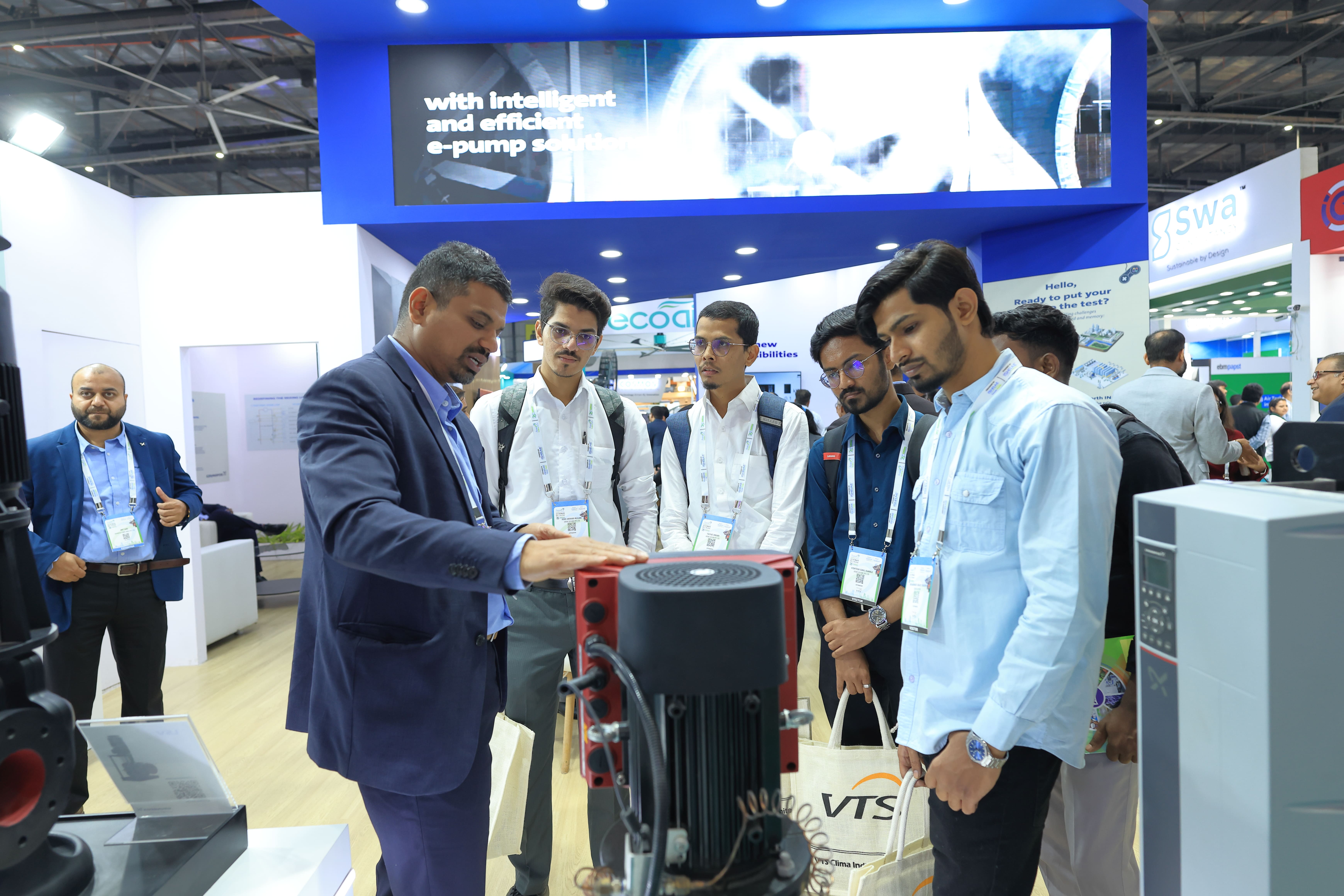
This is why expo stand services today are shifting toward experiential thinking. The only way a visit is memorable for visitors is if most of their senses of seeing, hearing, feeling, and touching are engaged.
Research consistently shows that experiential environments drive stronger recall. In fact, studies in experiential marketing suggest that over 70% of consumers are more likely to remember brands that engage them through immersive experiences rather than passive displays.
This is where skilled exhibition stall designers rethink the purpose of a booth. Instead of presenting information, they design moments:
- A pause point that invites curiosity
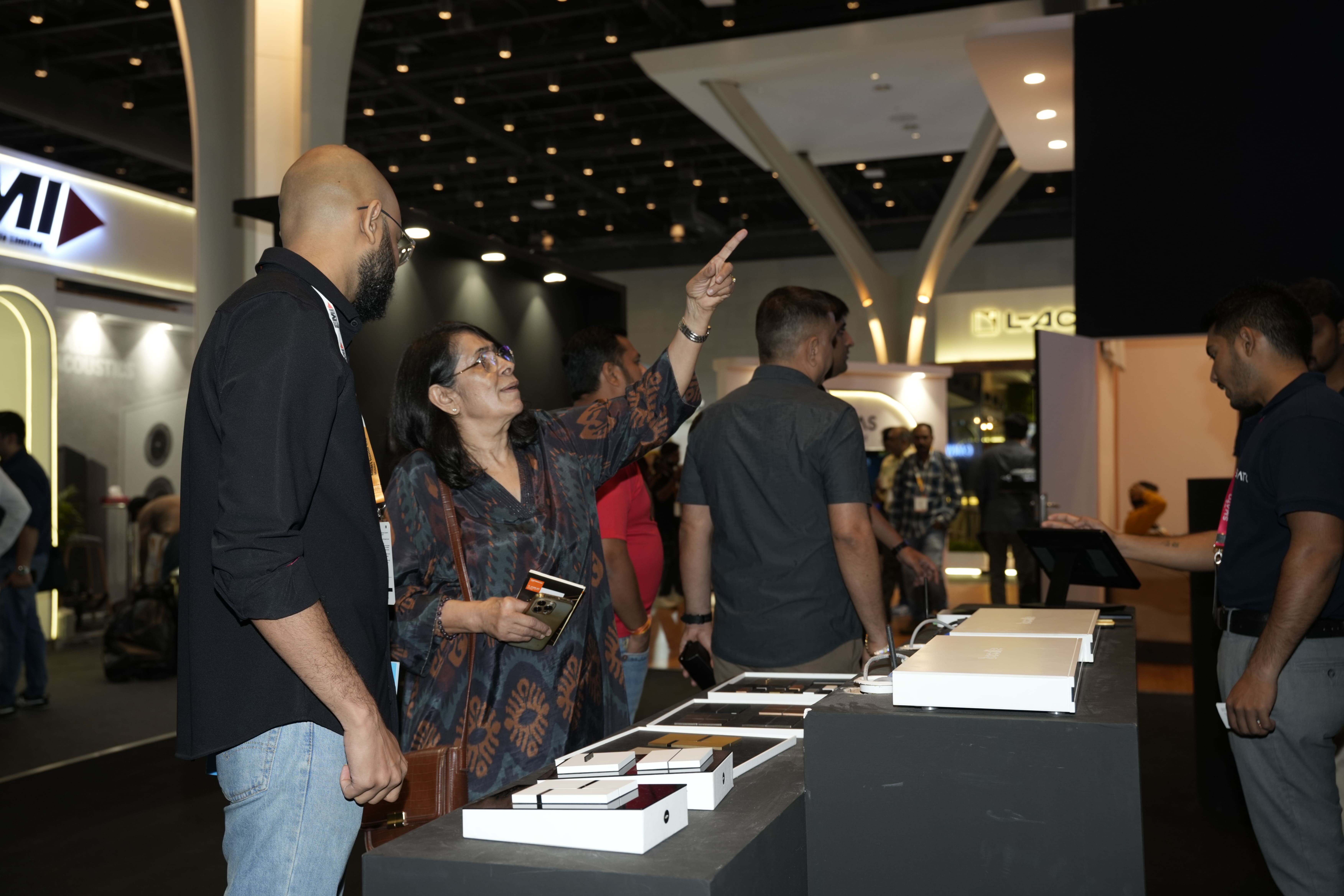
- A tactile interaction that builds connection
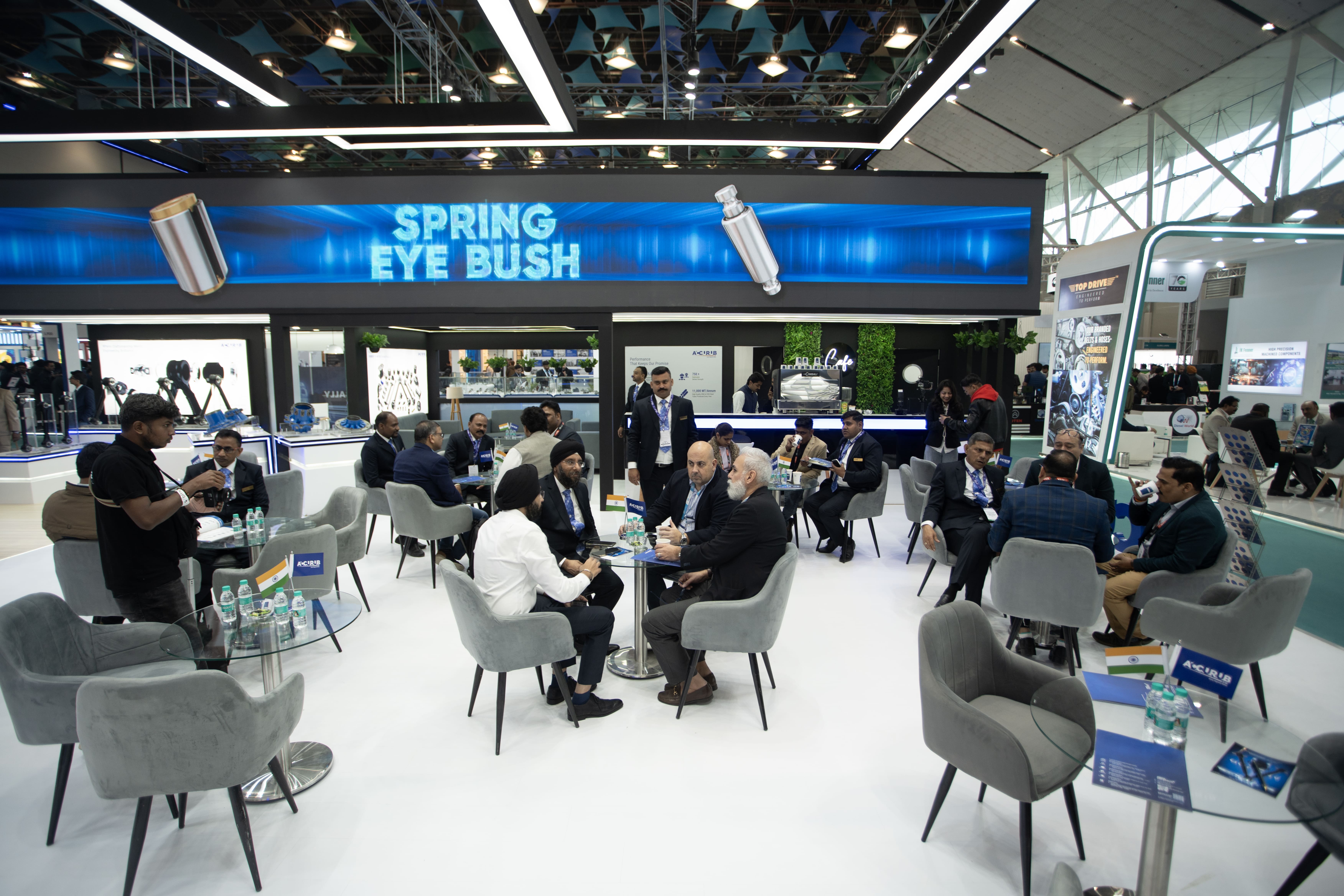
- A space that feels comfortable enough to stay
Because visitors rarely remember specifications. They remember how a space made them feel.
The Blueprint: Strategic Spatial Storytelling
A well-designed exhibition space behaves like a carefully written script. It doesn’t rely on chance interactions; it guides them.
An experienced exhibition stall design company approaches layout as a storytelling tool. Every entry point, sightline, and pathway is intentional.
At the core of strong exhibition experience design is visitor flow orchestration:
- Entry zones that feel open and inviting
- Clear visual anchors that draw attention inward
- Gradual movement from curiosity to deeper engagement
- Defined zones for exploration, interaction, and conversation
For example, visitors don't want to go deeper into a booth unless they can tell it's going to be of value to them. The product showcase in this case can be placed in the booth's exterior space so that the visitors can see the value firsthand, explore as they like, and then commit to entering.
As Insiya Bootwala, Senior exhibition designer, at Blues N Coppers, puts it: “When a visitor chooses to step in rather than being pulled in, the quality of engagement changes completely.”
This is the difference between forcing attention and guiding it.
Lighting, Ambience & Sensory Experience
Booth ambience is not just decoration. It's a whole strategy,
A visually striking space might attract visitors, but ambience determines whether they stay.
Take cafes, for example. No matter how hyped the cafe is online, if the ambience does not want to make you pause, if the seating isn't comfortable, you won’t dwell long enough to engage with the community there.
Let’s be real, you don’t want your booth visitors to be taking their coffees to-go.
This is where immersive brand experiences begin long before any conversation happens.
Lighting temperature, material textures, and acoustics all influence perception subconsciously:
- Warm lighting creates comfort and encourages longer interactions
- Harsh lighting may increase visibility but reduces dwell time
- Soft materials and textures make spaces feel more welcoming
- Controlled sound levels prevent cognitive fatigue
A cold, transactional setup might display products efficiently. But a thoughtfully designed environment builds emotional comfort.
This is why booth ambience is not decoration — it’s strategy.
Theatrical Storytelling in Exhibition Design
The most effective experiential exhibition spaces follow a principle borrowed from theatre sequencing.
Instead of presenting everything at once, they reveal information gradually:
- A visual hook that sparks curiosity, like a visual anchor that can be spotted from any side of the exhibition hall
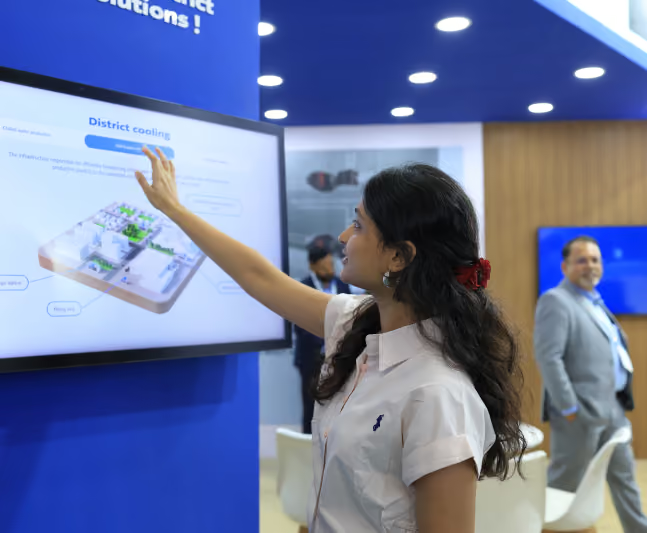
- A secondary layer that invites exploration, like interactive kiosks or product demos
- A focal point that delivers the core message of communication, branding, or having to discuss with salespeople about your pain points.
- A final interaction that reinforces memory product showcases that solve your pain points.
This is where sensory brand storytelling becomes powerful. It creates anticipation before delivering information.
Think of it like a stage performance. Every scene builds toward an “encore”which is usually the product itself.
Because curiosity drives engagement far more effectively than information overload.
Execution Precision — Where Brand Trust Is Built
Even the strongest concept can fail if execution lacks precision.
This is where experienced trade show booth builders differentiate themselves from average providers. Execution is not just about assembling components; it’s about translating intent into reality without compromise.
Precision shows up in:
- Seamless material finishes:
Joints, textures, and surfaces feel intentional rather than pieced together. A poorly finished panel, uneven edges, or visible inconsistencies can subtly weaken the premium feel of the environment. - Perfect alignment of structural elements:
Whether it is suspended signage, wall elevations, counters, or display zones, symmetry and proportion shape how polished and trustworthy a space feels. When elements feel visually balanced, the booth appears stable, deliberate, and professionally executed.
- Consistent lighting calibration:
Consistent lighting calibration affects far more than visibility. It influences mood, product perception, and spatial hierarchy. A beautifully designed stand can quickly feel fragmented when focal points are overlit, shadows fall awkwardly, or lighting temperatures vary across zones. - Clean integration of graphics and technology:
The clean integration of graphics, screens, cables, and interactive technology often separates refined builds from rushed ones. Hidden wiring, well-placed displays, and uninterrupted visual surfaces make the environment feel cohesive rather than technically cluttered. - Timely and coordinated installation:
Timely and coordinated installation ensures that fabrication, logistics, electrical work, branding, and on-site finishing all move in sync. When teams operate without alignment, the result is often rushed fixes, misaligned elements, or visible compromises that reduce confidence in the final space.
Visitors may not consciously notice these details, but they feel them.
This is why leading exhibition stand builders treat execution as a core part of brand storytelling. Because inconsistency in build quality often translates into perceived inconsistency in the brand itself.
How Sensory Design Builds Brand Momentum
When spatial design, ambience, storytelling, and execution align, the impact goes far beyond creating a visually impressive exhibition space. What begins as a well-designed visitor experience can gradually build something more valuable: brand momentum.
This happens because sensory design influences not just how people interact with a booth in the moment, but how they carry that experience forward after they leave it.
The first layer is stronger recall. When lighting, materials, movement, sound, and messaging feel cohesive, visitors are more likely to remember the experience as a whole rather than isolated visuals or product displays. A space that feels intentional creates emotional memory, and emotional memory lasts longer than information alone.
That stronger recall often leads to better conversations. When visitors feel comfortable, engaged, and naturally guided through a space, interactions become more meaningful. Instead of quick transactional exchanges, brands create room for curiosity, deeper questions, and stronger relationship-building.
From there, those stronger conversations often result in higher-quality leads. Visitors who spend more time exploring, interacting, or asking informed questions are typically more invested than passive foot traffic. The focus shifts from attracting volume to creating relevance — where engagement quality matters more than booth traffic alone.
Over time, this builds long-term brand association. Even after the event ends, visitors tend to remember brands that delivered a clear, immersive, and cohesive experience. Whether through follow-up conversations, referrals, or social sharing, the brand remains tied to a feeling of professionalism, trust, and clarity.
This ripple effect is what makes immersive brand experiences effective rather than simply impressive:
Stronger Recall → Better Conversations → Higher-Quality Leads → Long-Term Brand Association
When these layers reinforce one another, the exhibition space becomes more than a temporary installation. It becomes an active contributor to how people perceive, remember, and return to the brand long after the show floor is gone.
Common Mistakes That Break the Experience
Even well-intentioned setups can lose impact due to avoidable gaps:
- Overdesign without flow
A booth can be visually rich, architecturally ambitious, and filled with multiple focal points. All of this, however, can quickly become overwhelming if visitors are unsure where to enter, where to move, or where to pause. In exhibitions, visual complexity may attract attention, but clarity of movement determines whether people stay engaged. - Poor lighting despite premium builds
A high-investment structure can still feel cold, fragmented, or flat when lighting is treated as an afterthought. Harsh shadows, inconsistent brightness, or poorly lit focal areas can reduce emotional comfort and weaken how products or brand elements are perceived. A strong build may draw attention, but ambience often determines dwell time. - Inconsistent messaging across touchpoints
A booth may communicate one visual identity, while screens, brochures, staff messaging, or product displays suggest something different. These mixed signals create friction. When messaging lacks consistency, visitors struggle to understand what the brand stands for, reducing both clarity and recall. - Overcrowded layouts
In an attempt to showcase more products, add multiple meeting zones, or increase interaction points, some spaces become physically restrictive. Limited movement paths, narrow walkways, or poorly placed furniture can create subtle discomfort. Visitors may leave quickly, not because the booth lacks interest, but because the space feels difficult to navigate. - Isolated product displays
Products placed on pedestals or shelves may be visually visible, but visibility alone does not create engagement. Without storytelling, demonstrations, or contextual placement, products can feel disconnected from the larger brand narrative. Visitors may see them, but they may not understand why they matter. - Ignoring visitor comfort
Many exhibition environments also overlook visitor comfort, which directly affects how long people stay and how deeply they engage. Seating, acoustics, temperature, spacing, and intuitive layout all shape emotional ease. A booth that looks polished but feels noisy, cramped, or difficult to navigate often limits meaningful interaction. - Execution gaps between design and reality
A concept may look refined in renderings, but if installation quality, material finishing, graphics placement, or structural alignment fall short on-site, the experience feels incomplete. These inconsistencies are often subtle, but visitors quickly associate poor execution with a lack of precision or reliability in the brand itself.
The common thread across all these mistakes is simple: they are rarely isolated design flaws. These are breakdowns in experience.
Because in exhibitions, visitors do not judge elements separately. They respond to how the entire environment feels, how smoothly it flows, how clearly it communicates, and how confidently it reflects the brand behind it.
Turning Exhibition Spaces into Brand Momentum
Exhibitions have evolved far beyond product displays or temporary structures. Today, the most effective exhibition spaces are built around experience, where spatial storytelling, sensory design, visitor flow, and execution precision work together to shape how people engage, remember, and respond.
When these elements align, a booth does more than attract attention. It creates stronger recall, better conversations, higher-quality engagement, and long-term brand association. That is what transforms an exhibition space from a physical setup into a strategic business touchpoint.
The role of exhibition stand builders has therefore shifted from simply building structures to creating environments that support both brand perception and meaningful interaction.
At Blues N Coppers, we see exhibitions as immersive ecosystems where every detail should feel intentional, cohesive, and experience-led.
If you’re planning your next exhibition, lets explore how your space can do more than just be seen and start creating lasting momentum.
FAQs on Exhibition Stand Builders & Experiential Exhibition Spaces
1. How do exhibition stand builders create immersive brand experiences?
They combine spatial planning, sensory design, and storytelling to create environments that engage visitors emotionally and physically.
2. Why does sensory experience matter in exhibition design?
Because visitors respond to how a space feels before they process information, influencing dwell time and engagement quality.
3. How can exhibition stall designers improve visitor engagement?
By designing intuitive layouts, creating interaction zones, and guiding visitor flow naturally through the space.
4. What role does lighting and ambience play in exhibition spaces?
Lighting and ambience shape first impressions and influence how long visitors stay and how comfortable they feel.
5. How do trade show booth builders ensure execution precision?
Through detailed planning, quality control, and coordinated installation that aligns perfectly with the design intent.
6. Why are experiential exhibition spaces more memorable than traditional booths?
Because they engage multiple senses, creating emotional connections that improve recall and brand perception.